Sam Altman Had a Bad Day in Court. Here's What the Jury Just Heard
Elon Musk's lawsuit against OpenAI is exposing everything the AI world tried to hide. The testimony is uglier than anyone expected.
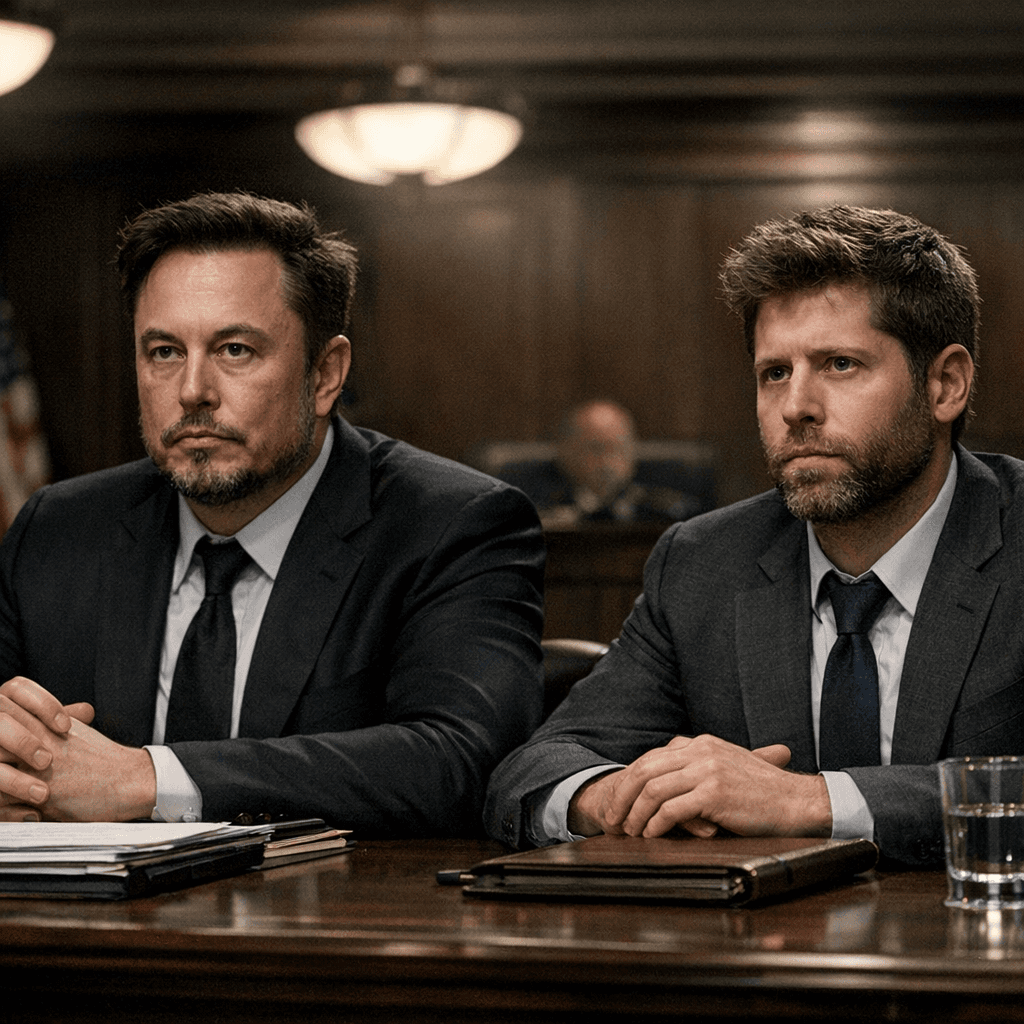
The courtroom in Oakland, California is producing more drama than most Silicon Valley pitch meetings. Elon Musk is suing OpenAI's Sam Altman and Greg Brockman, and the jury is hearing things that would make any tech investor wince.
I spent the last two hours going through every major publication's coverage of this trial. Here's what's actually happening, why it matters, and what nobody's saying yet.
What the Trial Is Actually About
Most headlines call it "Musk vs Altman" but that's reductive. The core issue is whether OpenAI betrayed its founding mission when it pivoted from nonprofit to for-profit.
Musk argues he donated $38 million to OpenAI under the impression it would remain a genuine nonprofit dedicated to safe AI for humanity. When Altman and Brockman flipped it into a commercial entity — eventually securing Microsoft's billions — Musk claims he was deceived.
The trial is being watched by every AI lawyer, investor, and ethicist in the industry. Whatever comes out of this will shape how AI companies structure their governance for decades.
The Testimony That's Making Headlines
Mira Murati, former CTO, testified via video that Altman "sowed chaos" and distrust among top executives. Not vague leadership concerns — specific, documented patterns of behavior that made other executives uncomfortable.
This is the same Mira Murati who was briefly interim CEO after the board fired Altman in 2023. She's not a Musk partisan. She's someone who worked inside the company and watched it happen.
Helen Toner, who was on the board that actually fired Altman, testified about the culture of deception she witnessed. Her testimony painted Altman as someone who consistently prioritized control and narrative over honest disclosure.
Tasha McCauley voted to fire Altman and told the jury why: she described the organizational culture as one where "lying" was normalized. Not whistleblowing, not a grudge — a direct account from someone who had direct visibility.
Shivon Zilis — who worked closely with both Musk and OpenAI — revealed that Musk tried to poach Altman at one point. That's not nothing. If Musk wanted Altman working for him, he clearly didn't think Altman was a scammer at that time.
The Judge Is Not Amused
Judge Yvonne Gonzalez Rogers has been running a tight ship. She reprimanded Musk for posting "Scam Altman" and "Greg Stockman" on X/Twitter from the courtroom. Her exact words: "How can we get things done without you making this more difficult?"
When a microphone stopped working last week, she deadpanned: "We are funded by the federal government." The courtroom laughed. She didn't.
This is a judge who wants the facts, not the circus.
What Nobody's Saying
Here's the uncomfortable part that the coverage is dancing around: if Altman is as toxic as this testimony suggests, why did every major tech company try to hire him after OpenAI fired him? Why did Satya Nadella immediately call offering him a job?
Either the entire industry is complicit in enabling a pathological liar, or the truth is more complicated than "Altman bad, Musk good."
I've watched enough of these cases to know: when both sides have financial stakes, the truth is usually somewhere in the middle and nobody comes out clean.
What This Means for the AI Industry
Regardless of who wins this case, the trial is already changing how the industry thinks about AI governance.
Nonprofit-to-profit conversions are going to face much more scrutiny. Future Altman/Brockman types will think twice before taking nonprofit money and then flipping the structure.
Board accountability is getting a spotlight. The OpenAI board fired Altman, then reversed course in days. That's not governance — that's panic. Investors are watching.
The Musk factor is complicated. He's suing for damages but also for injunctive relief, which would restructure OpenAI. Some observers think this is really about Musk wanting more control over AI development, not justice.
My Verdict
If you're an AI enthusiast watching this thinking "finally someone's holding Altman accountable" — maybe. But remember: Musk donated $38 million voluntarily. Nonprofits routinely take money with strings attached, and if Altman promised something specific that he didn't deliver, that's fraud, not just bad blood.
If you're an investor: this case is going to set precedent for every AI company that took nonprofit funding with mission commitments. Legal teams are paying very close attention.
If you're just someone who uses ChatGPT and wants AI to be safe: the testimony is disturbing but it's also two wealthy men fighting over control of a technology that will shape civilization. Your interests aren't really on either side of this lawsuit.
The real story isn't whether Altman is a liar or whether Musk is a hypocrite. It's that the AI industry has been operating with minimal governance, minimal accountability, and maximal hype — and this trial is the reckoning.
The Exact Prompt I Use to Follow This Story
If you want to track this trial as it develops, here's my daily search prompt:
Elon Musk OpenAI trial [current month] [current year] site:reuters.com OR site:bloomberg.com OR site:theverge.com OR site:technologyreview.com
Run this once a day. The major outlets have reporters in the courtroom. The details that matter will show up there first.
This trial is ongoing. I'll be following it closely and updating my analysis as new testimony drops. If you want the full story without the paywall, subscribe to BitBrief — I break this stuff down every weekday.